

The food choices we make every day have consequences that extend well beyond our own plates. Choosing organic food — including organic cherry fruit — means choosing a way of growing that is better for human health, better for soil, and better for the ecosystems that all of us depend on. Here is what that actually looks like in practice.
What "Organic" Actually Means
Organic is one of the most misused words in food marketing. Plenty of products carry the language of organic without the substance behind it, which makes it easy to be sceptical. In New Zealand, certified organic produce is verified by an independent certifying body against a recognised standard — which means the claim has been audited and documented, not just stated.
For certified organic cherries, this means:
-
No synthetic pesticides at any stage of growing
-
No artificial fertilisers — nutrients come from organic matter and natural inputs
-
No post-harvest chemical treatments to extend shelf life or improve appearance
-
No genetically modified inputs anywhere in the production process
Certification requires annual inspections and record-keeping. When you see a certified organic label from an NZ certifier, there is a paper trail behind it.
The Health Case for Organic Food
The health debate around organic food is nuanced, and it is worth being honest about what the evidence does and does not show. What is well established is that conventionally grown produce carries higher pesticide residues than organic produce. Multiple large-scale studies — including a 2012 Stanford meta-analysis and subsequent research published in the British Journal of Nutrition — have confirmed this consistently.
Cherries are among the fruits where this distinction matters most. Conventional cherry crops are treated with multiple pesticide applications across the growing season, and cherry skin is consumed directly rather than peeled away. Choosing organically grown cherries means significantly lower pesticide exposure in every box.
There is also emerging evidence that organically grown fruit tends to have higher levels of certain antioxidants, including anthocyanins — the compounds responsible for the deep colour in dark cherry varieties. The theory is that plants grown without synthetic inputs develop stronger natural defences, producing more of these protective compounds as a result. The research is ongoing, but the direction is consistent.
Why Sustainable Food Matters Beyond Your Kitchen
The benefits of organic growing extend far past the fruit itself. Sustainable food production is about how an orchard — and the land around it — functions as an ecosystem over time.
Soil Health
Synthetic fertilisers provide nutrients directly to plants but bypass and gradually degrade the living system underneath. Organic growing feeds the soil itself — through compost, cover crops, and organic matter — which supports the billions of microorganisms that make nutrients available to plants naturally. Healthy soil sequesters carbon, retains water more efficiently, and produces more nutritious fruit over the long term.
Biodiversity
Conventional orchards rely on pesticides to manage insect pressure, but those chemicals do not discriminate. Pollinators, beneficial insects, and the birds that control pest populations are all affected. Organic orchards maintain a more balanced ecosystem, where natural predator-prey relationships do some of the pest management work. The result is a more resilient and biologically diverse growing environment.
Waterways
Synthetic fertilisers and pesticides applied to soil do not stay there. Runoff carries them into streams, rivers, and groundwater, where they affect aquatic ecosystems and drinking water quality. Organic farming eliminates these inputs at the source, which matters particularly in a region like Central Otago where clean waterways are part of the landscape's identity.
Organic Cherries and the Bigger Picture
Every time someone chooses organic food over conventionally grown produce, they are making a small vote for a different kind of food system. Organic growers invest more time, more care, and often more cost into producing food without shortcuts. Choosing their fruit supports that investment and sends a signal about what consumers value.
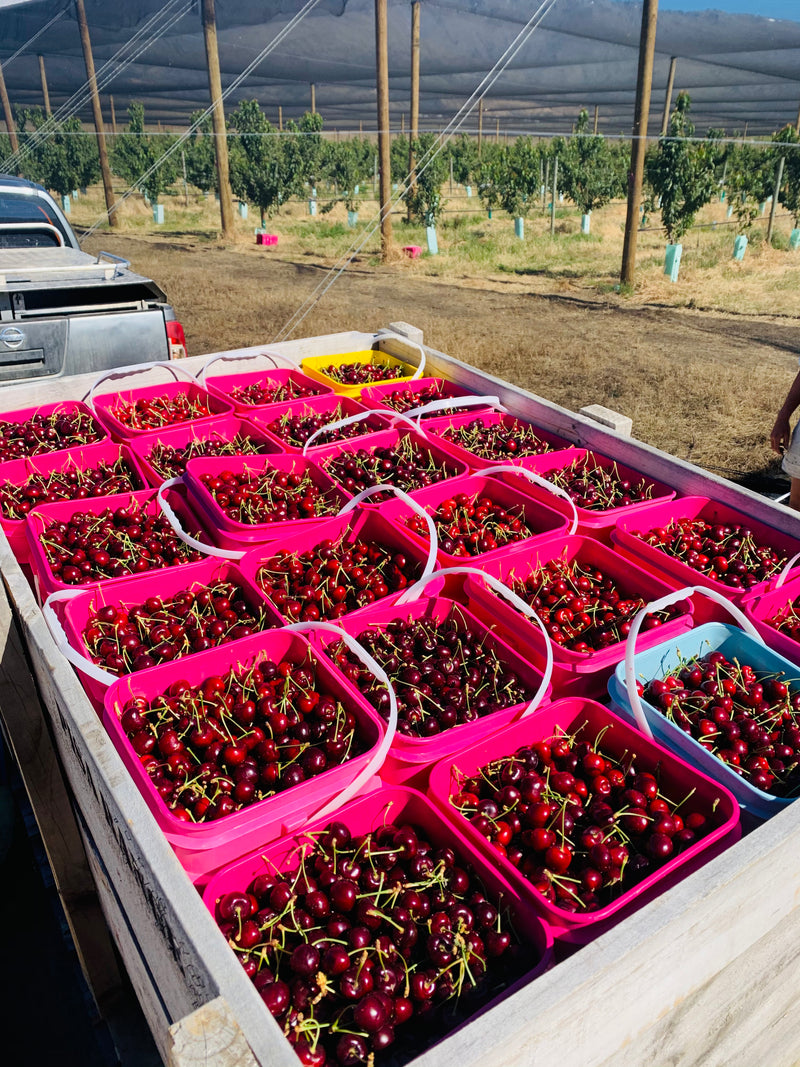
Fresh cherries NZ-grown from certified organic orchards are available for a short window each season. The fruit travels less distance, involves fewer chemical interventions, and supports farming practices designed to last — not just to maximise yield in the short term.
For anyone who cares about where their food comes from and how it is grown, Central Otago cherries from an organically grown orchard are one of the clearest expressions of that commitment available in New Zealand.
5 FAQs About Organic Cherries and Sustainable Food
Are organic cherries healthier than conventional cherries?
Certified organic cherries have significantly lower pesticide residues than conventionally grown cherries. There is also emerging evidence that organic fruit contains higher levels of certain antioxidants. While the overall nutritional differences are still being studied, the reduction in chemical exposure is well established.
Why does organic food cost more?
Organic farming is more labour-intensive and typically produces lower yields per tree than conventional farming. Without synthetic inputs to maximise output, growers invest more time in soil management, natural pest control, and hand-harvesting. The price reflects the true cost of growing food that way.
What certifying bodies operate in New Zealand?
The main organic certifiers in New Zealand are BioGro NZ and Organics Aotearoa New Zealand (OANZ). Both audit producers against recognised organic standards and issue certification that consumers can verify.
Does organic cherry fruit taste different?
Many people find that organically grown cherries have more complex, intense flavour — particularly those grown in a high-quality region like Central Otago. Whether this is attributable to organic practices specifically or to the combination of organic growing and ideal growing conditions is difficult to separate, but the taste results speak for themselves.
Where can I buy fresh organic cherries in NZ?
Pure Organic Cherries grows and ships certified organic cherries from Central Otago across New Zealand during the season (November to February). You can buy cherries online and have them delivered direct from the orchard.
Organic growing is a commitment — to the land, to the people eating the fruit, and to a food system worth believing in. Pre-order your box of organically grown fresh cherries and taste the difference that commitment makes.